Culinary Roots of Oaxaca: From Ancestral Corn to Clay Ovens
Published December 08, 2024 · Field Dispatches by Mateo Morales
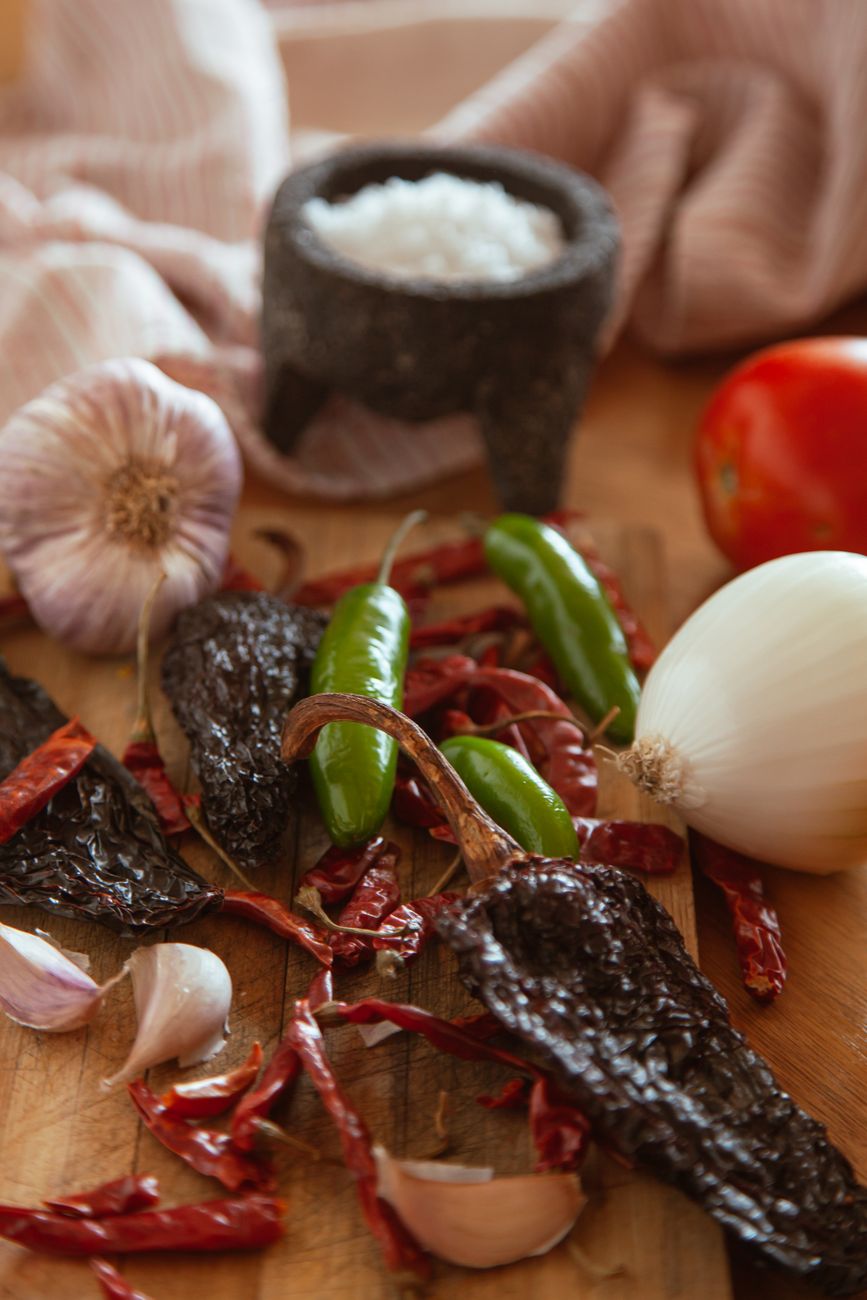
To understand Oaxaca is to step into a kitchen where fire is treated as an active ingredient and corn is regarded as sacred ancestry. In the shadow of the Sierra Madre del Sur, cooking is neither theatrical nor rushed; it is an inheritance measured in hours of slow simmering over holm oak embers.
Here, the ancient process of nixtamalization—cooking dried maize kernels in mineral limestone water before stone-grinding—remains the fundamental rhythm of daily life.
The Alchemy of Seven Moles
In the valley town of Teotitlán del Valle, master cook Doña Elena demonstrates the preparation of Mole Negro. Over twenty distinct ingredients, including charred chilhuacle chiles, Mexican chocolate, roasted plantains, raisins, and sesame seeds, are ground by hand on a basalt metate until a glossy, aromatic paste forms.
“A mole cannot be ordered in haste. It requires patience to balance smoke, bitterness, sweet dried fruit, and earth.”
The resulting sauce is simmered slowly in unglazed earthenware pots, deepening in complexity over several hours until it achieves its signature velvety texture and intoxicating fragrance.
Mezcal and the Sacred Agave
A short drive into the arid valley leads to artisanal palenques where wild espadín and tobalá agaves are roasted underground in stone-lined pits for five days. The piñas emerge caramelized, smoky, and rich with sweetness, ready to be crushed by a horse-drawn limestone tahona.
For the traveler, discovering Oaxaca through its culinary lineage fosters a profound connection to the soil and the generational resilience of its Zapotec and Mixtec custodians.